
Plan a restaurant sound system zone by zone: split the floor into dining room, bar, patio and back of house, then pick speaker types per zone and size the coverage before buying anything. Ceiling speakers carry dining rooms at conversation-friendly levels, patios need weatherproof units on their own volume, and a retrofit can go wireless with a dual-output transmitter and one receiver per zone instead of pulling cable.
What a restaurant sound system needs to do
A restaurant sound system has one job that home audio does not: even, unremarkable coverage for a room full of conversations, the exact goal the coverage charts in commercial audio design guides exist to serve. Guests should hear the music without noticing it, staff should control each area without walking to a closet, and nothing about the setup should fight the floor plan. That job decomposes into four requirements: even coverage at every seat, independent control per area, a source that runs open to close, and hardware that survives a working kitchen's grease and heat.
Reliability belongs on that list twice. A home system can reboot after an update whenever it likes; a dining room at seven on a Friday does not have that option. Whatever the build, someone on staff has to be able to restart it, and the components that hold the source role need to run for eleven-hour days without babysitting. Restaurant audio is utility infrastructure with a soundtrack attached. A restaurant sound system that hits every coverage target but cannot survive a software update at peak service has failed at the part guests actually notice.
Those requirements are why the project starts with paper instead of a shopping cart. The most common failure in restaurant audio is not bad equipment; it is good equipment bought for the wrong shape of room, one loud zone compensating for four silent corners. Planning the zones before the shopping trip costs an hour and prevents that.
Start with zones, not speakers
Walk the floor and mark the areas that behave differently: the dining room, the bar, the patio, restrooms, and back of house. Each of those areas wants its own volume, and some want their own content, which is what turns a restaurant sound system from a shopping list into a design. Commercial audio has a whole vocabulary for this; JBL Professional's distributed-systems primer is the reference read. The bar runs louder and more energetic than the dining room. The patio fights traffic noise that does not reach the tables inside. Restrooms and the entry keep music playing so the door area does not fall silent.
A zone is defined by volume control, not by walls. Two dining areas that play at the same level all day can be one zone; a dining room and the bar beside it are two zones even when they share open air, because their levels separate at dinner service. Most restaurants land between two and four zones, and deciding this before any hardware purchase is what makes every later number meaningful.
The floor plan also decides how honest the zone count can be. A square single-room café is one zone and done. An L-shaped room with a bar in the elbow wants two. A building that grew by annexing the shop next door usually wants three, whether or not the owner has said so out loud. Write the zones down with their boundaries and their relative levels, dining quieter, bar warmer, patio loudest, and that one paragraph becomes the specification everything else hangs from. Every later choice about a restaurant sound system, speaker counts, amplifier sizing, wireless versus wired, reads against that paragraph.
Speaker choices by room type
| Zone | Typical speaker choice | Why |
|---|---|---|
| Dining room | Distributed ceiling speakers | Even coverage without visual clutter; level stays consistent seat to seat |
| Bar | Ceiling or surface-mount, denser placement | Higher energy and louder ambience need more sources at lower individual volume |
| Patio | Weatherproof surface speakers | Open air has no ceiling to mount into and no walls to contain the sound |
| Restrooms / entry | Small ceiling or wall units on the nearest zone | Continuity matters more than fidelity in small rooms |
Long runs with many small speakers point at a distributed line, the 70V (or 100V) system that commercial buildings have used for decades. Each speaker carries a small transformer, the amplifier drives the whole line at higher voltage, and cable runs stay light. JBL Professional's primer and Biamp's reference walk the same architecture, which is behind the ceiling-speaker grids in restaurants, offices and retail. The alternative, low-impedance home-style wiring, fits single rooms and short runs but gets clumsy at restaurant scale.
How many speakers your restaurant sound system needs
Distributed ceiling speakers are counted, not guessed. Manufacturers publish coverage data per model, and the planning math stacks those coverage circles across the ceiling with overlap so no seat sits in a dead spot; Bogen's system design guide is the classic worked reference. Ceiling height moves the number as much as floor area does: the same dining room at a nine-foot ceiling and at a sixteen-foot exposed-beam ceiling produce different counts, because coverage is a cone, not a column. Work the count per zone with the actual ceiling height and the manufacturer's coverage figure, then add margin at the room's busiest corners.
A worked sketch makes the method concrete. A 12-by-20-foot dining room under a nine-foot ceiling typically lands at two to four ceiling speakers in the planning stage, and the manufacturer's coverage chart decides between those numbers. The same method on the patio produces a different answer entirely, because open air has no ceiling to reflect off and weatherproof boxes throw in their own pattern. The counts differ, the method does not: coverage data, then overlap, then margins. And when the count for every zone is written down next to the zone plan, the restaurant sound system has a real specification, one a contractor can quote and an owner can compare bids against.
Wired, wireless and hybrid builds
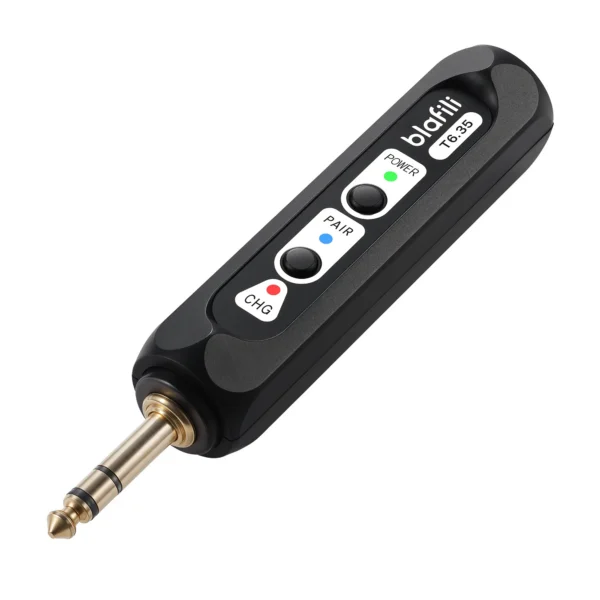
New construction favors wired distributed lines, because the walls are open and the cable is the cheapest part of the project. The interesting decisions live in retrofits. Pulling speaker cable through a finished dining room, a historic building or a lease you do not own turns a weekend project into a construction project, and that is where a wireless restaurant sound system earns its place: the source feeds a transmitter, and a small receiver sits at each zone's amplifier or powered speakers.
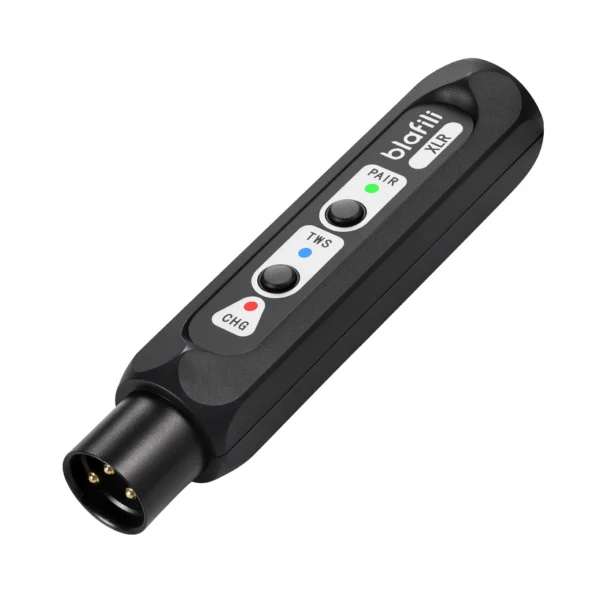
A two-zone wireless build is deliberately simple. The source side is easy, any phone, tablet or house player with a line or headphone output works, and our iPhone codec compatibility page covers what iPhones send over Bluetooth. From there, one dual-output transmitter feeds two receivers at once; one receiver per zone carries the audio to that zone's amp, and each zone's volume lives at the receiver. The dining room sits at background level while the bar runs hot, with no cable between them. The same logic extends to a patio: a third receiver follows the same pattern as long as the wireless link reaches, which is a range question to check against the building's shape rather than assume.
Hybrid builds are the quiet default in practice. A wired 70V grid covers the permanent dining rooms, and wireless feeds the areas that resist cable: the seasonal patio, the annex taken on mid-lease, the mezzanine the owner decides to open three years in. Treating wireless as the zone that follows the business, instead of the whole system, keeps both sides honest.
Cost follows the same logic as the build type. In a wired install, labor and cable scale with zone count and speaker count, which is why the zone plan from earlier in this restaurant sound system guide is also the budget's outline. In a wireless retrofit, the balance shifts from labor to hardware: transmitters and receivers replace the cable runs, and moving a zone later means moving a box instead of opening a ceiling.
Levels and placement that respect the meal
The levels of a restaurant sound system sit clearly below conversation. The working test is the guest at the far end of the table: if they can follow the conversation without leaning in, and hear the music without noticing it, the dining room is right. The bar earns a step louder for energy, the patio earns whatever competes with the street, and the entry matches the dining room so the door does not feel like a channel change. Keep the level decision per zone, and give whoever opens the restaurant a written note of the settings, because levels drift upward one busy Friday at a time.
Placement failures concentrate in two spots. Speakers aimed straight at a table turn background into a spotlight, so distributed ceilings spread sources wide instead of loud. And any microphone on the premises, live music or announcements, needs distance from the speakers that feed the same room, or feedback takes care of the volume decision on its own.
Music licensing in one paragraph
Playing recorded music to guests is a public performance in copyright terms, and in the United States that normally means clearing it through a licensing organization before opening night. Federal law narrows this for a specific case: small food-service and drinking establishments get a statutory exemption for music arriving by radio and television broadcasts, including cable and satellite delivery of TV, within size limits set in the statute itself. Home-streaming accounts do not carry business rights; consumer streaming terms are personal and non-commercial, and business music services state the same on the commercial side. Verify the specifics against the statute or a licensing professional; the rules carry thresholds, and thresholds are exactly where guesses fail.
FAQ
It depends on ceiling height and layout more than floor area, which is why coverage math comes after zoning. As a planning frame, distributed ceiling speakers are counted per coverage circle with overlap, and a small single-room restaurant often lands in the four-to-eight range while a dining room plus bar plus patio building needs separate counts per zone.
Quieter than table conversation. Guests should talk without raising their voices, so background levels sit clearly below speech; the bar can run a step louder for energy while the dining room stays at the bottom of the range. If staff lean toward the speaker to hear the music, it is too loud for a dining room.
New construction favors wired distributed lines because the walls are open anyway. Retrofits, historic buildings and patios are where wireless earns its place: a dual-output transmitter at the source feeds one receiver per zone, so each zone gets its own volume without cable runs through finished walls.
Playing music in a public business is a public performance in copyright terms. In the United States, venues typically clear this through licensing organizations, though federal copyright law contains a narrow exemption for certain small food-service and drinking establishments playing radio and television broadcasts, including cable and satellite delivery of TV. Verify your exact situation against the statute or a licensing professional before opening night.
A distributed audio line that carries audio at a higher voltage through small transformers at each speaker. It lets one amplifier drive long speaker runs and many small units, which is why restaurants, offices and retail stores have used it for decades.
blafili T6.35 Bluetooth Transmitter
A 1/4-inch TRS plus RCA input with simultaneous transmission to two receivers, so the dining room and the bar each hold their own volume. Plug the source in once and put a receiver where each zone needs it.
- 17 U.S.C. § 110 (exemptions from performance rights), Legal Information Institute copy, law.cornell.edu/uscode/text/17/110, accessed 2026-09-21
- blafili published product specifications (T6.35 dual simultaneous transmission; XLR receiver balanced output), per lab PROFILE caliber table, accessed 2026-09-21
- JBL Professional, "Distributed Speaker Systems 101" and Biamp, "Constant voltage speaker systems": 70V/100V architecture. jblpro.com + support.biamp.com, accessed 2026-09-21
- Bogen Communications, System Design Guide (ceiling coverage spacing rules). bogen.com/sites/default/files/2021-02/SysDsgn.pdf, accessed 2026-09-21
- Shure, "How to control feedback in a sound system". shure.com/en-us/insights/, accessed 2026-09-21
- Spotify End User Agreement (personal, non-commercial use) and SiriusXM for Business (consumer subscription in business is a violation). spotify.com/us/legal/ + siriusxm.com/business, accessed 2026-09-21